Why Most Travel AI Apps Don’t Actually Work
Travel AI can generate a clean “3-day Thailand” itinerary in seconds - but it still feels off. Most tools optimize for text, not taste, and that’s the hard part. If it’s just “text in, text out,” you won’t beat ChatGPT or Gemini.
glide is building for what actually matters: understanding your taste and turning it into trips that feel like you.
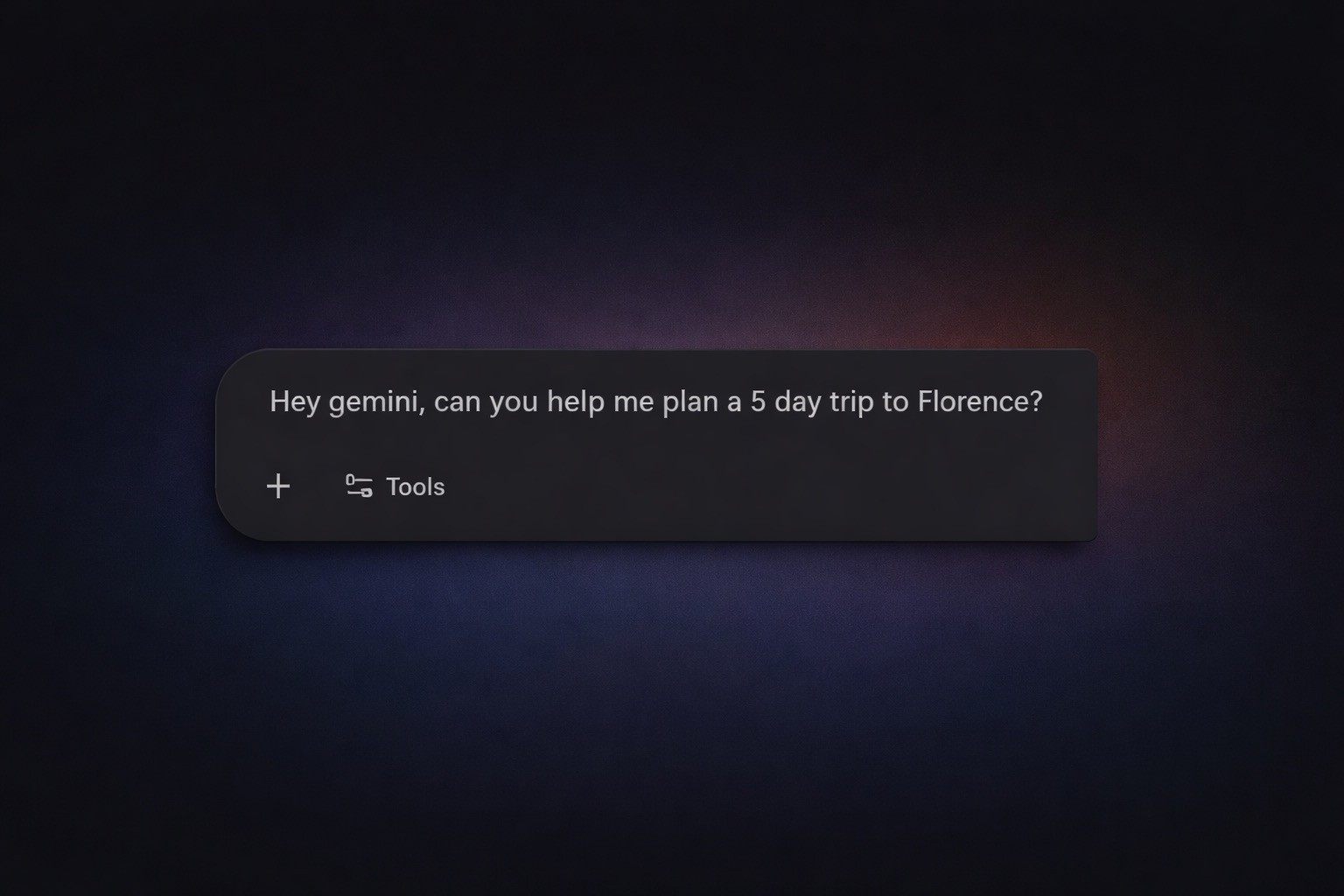
Travel AI can generate a clean “3-day Thailand” itinerary in seconds - but it still feels off. Most tools optimize for text, not taste, and that’s the hard part. If it’s just “text in, text out,” you won’t beat ChatGPT or Gemini.
glide is building for what actually matters: understanding your taste and turning it into trips that feel like you.
Jan 11, 2026 | 4 min read
Travel AI plans trips, but doesn’t understand people


we all have tried this, but anwer me honestly - have you ever came back to it? actually used it?
Most travel AI tools rely on prompts. You type a sentence, the AI fills in the gaps, and if it’s “agentic,” it asks a few follow-up questions. But travel preferences don’t work like that.
What you like isn’t something you explain once, it isn’t fixed, and most of the time you can’t even articulate it clearly.
Most travel AI tools rely on prompts. You type a sentence, the AI fills in the gaps, and if it’s “agentic,” it asks a few follow-up questions. But travel preferences don’t work like that.
What you like isn’t something you explain once, it isn’t fixed, and most of the time you can’t even articulate it clearly.
Your taste reveals itself over time - in the places you stop to save on Instagram and TikTok, the experiences you repeat again and again, and the spots you scroll past, skip, or actively avoid.
That’s where real personalization lives: in patterns, not prompts. Without this context, even the most detailed AI-generated itinerary is still just a guess - a well-written one, maybe, but a guess nonetheless. True travel personalization comes from understanding your evolving taste, not from a single request.
Your taste reveals itself over time - in the places you stop to save on Instagram and TikTok, the experiences you repeat again and again, and the spots you scroll past, skip, or actively avoid.
That’s where real personalization lives: in patterns, not prompts. Without this context, even the most detailed AI-generated itinerary is still just a guess - a well-written one, maybe, but a guess nonetheless. True travel personalization comes from understanding your evolving taste, not from a single request.
Preferences can’t be reduced to a few questions


your preference are constantly evolving - based on what you see, what your friends tell you, and what you have done
Many AI travel planners reduce you to a few onboarding choices - "beach or mountains", "budget or luxury", "party or relaxed". That’s to some extent - helpful, but it misses how preferences actually form.
You might naturally gravitate toward Japanese food, enjoy historical neighborhoods more than crowded hotspots, or keep choosing quieter cafés over loud bars - even if you’ve never said it out loud.
These preferences reveal themselves gradually through repetition and avoidance, not through a one-time question. Travel isn’t defined by categories you pick, but by patterns in what you’re drawn to over time.
Popular doesn’t always mean right
Another problem is that everyone gets the same recommendations. Most Travel AI apps use the same blogs, reviews, and ratings. It’s not personalized to you, it's personalized for “people like you” - based on the “onboarding questions” that you have answers; it’s not personalization, it’s bucketing.
That’s why the same rooftop bars and cafés keep showing up. Highly rated places can be good, but they aren’t right for everyone. Good travel isn’t about doing what’s popular, it’s about finding what feels right for you.
Travel inspiration already exists, AI ignores it
People rarely start planning a trip from zero. Most already have places in mind - these might be in the form of saved reels on Instagram, pinned places on Google Maps, screenshots of recommendations, or links shared by friends.


how many collections on IG are too many collections?
Discovery itself isn’t the hard part. We’re constantly exposed to cafés, neighborhoods, and spots through reels and recommendations from locals or travelers. The challenge isn’t finding places to go, it’s making sense (and use) of everything you’ve already discovered.
This sea of stuff and content that you have saved over the years is real intent. Real taste.
But most Travel AI apps ignore all of this and ask users to start over. The result is a gap between inspiration and action, where great ideas never turn into real plans.
If an AI doesn’t understand taste, it doesn’t understand travel - no matter how good the itinerary looks.
Closing Remarks
Closing Remarks
This is why most travel AI still feels disconnected. It plans trips in isolation, without understanding the context people already carry with them - their accumulated inspiration, repeated choices, and evolving taste.
When AI ignores that history, it isn’t really helping you explore, it’s just generating another version of the same trip. Real progress in travel AI won’t come from better prompts or longer itineraries, but from systems that understand people before they plan. Until then, travel AI will keep sounding impressive while missing what actually matters.
The next generation of travel AI won’t start with a question. It will start with context.


Every journey starts with a spark of inspiration.


Supported content sources at present

Every journey starts with a spark of inspiration.


Supported content sources at present